You’re planning to remove an in-ground pool in Orange County—for yard space, lower upkeep, insurance relief, or resale—and the first question is always the same: what should I budget for?
There is no single number that fits every property. Comparing bottom-line bids without matching scope is how homeowners get surprised by fill standards, deck work, or permit line items later. What you can do early is understand the cost-driver categories that show up in almost every Orange County pool removal estimate—so you ask better questions and compare bids apples-to-apples.
This guide is a planning checklist for conversations with a licensed demolition contractor who knows South Coast and Orange County requirements. Categories only—no invented prices.
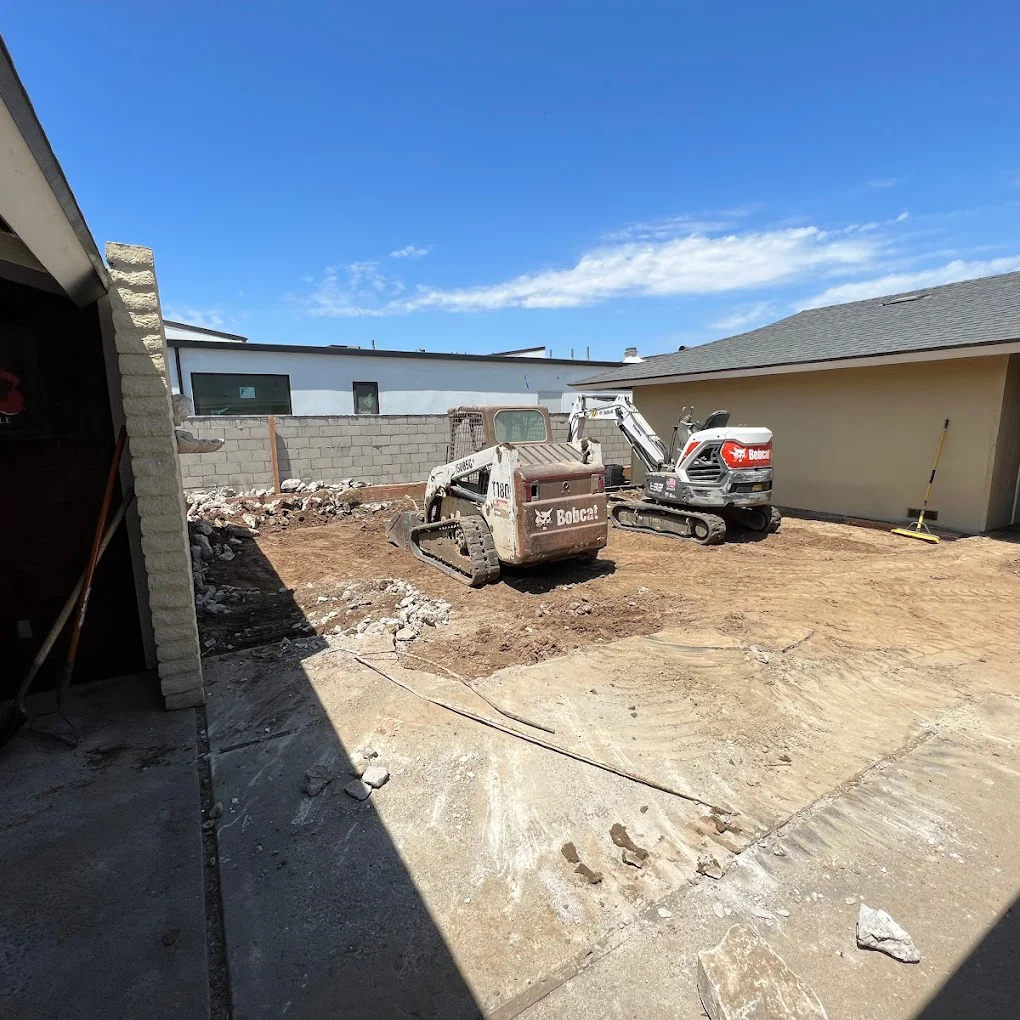
Why Pool Removal Budgets Vary So Much in Orange County
Two homes on the same street can get very different scopes:
- Pool type and shell construction (gunite/shotcrete vs vinyl or fiberglass)
- Removal method (full removal vs partial fill / abandon-in-place where allowed)
- Access for equipment and trucks (tight side yards, hillside lots, HOA gates)
- Fill and compaction standards required by the city or county
- Haul-away volume and disposal of concrete, rebar, and debris
- Permits and inspections in your specific city
- Landscaping and hardscape restoration after the hole is filled
Orange County cities do not all treat pool abandonment and fill the same way. Confirm local rules before you lock a budget.
Cost Driver 1: Gunite vs Vinyl (and Other Shell Types)
Gunite / shotcrete pools
Common across Orange County. Thick concrete shells with steel reinforcement typically mean more cutting, breaking, and heavy material to haul—more equipment time and more dump loads than lighter systems.
Vinyl-liner pools
Often a different structural package. Removal and disposal can be simpler in some cases—but access, depth, and surrounding concrete decks still matter.
Fiberglass and other shells
Less common in older OC neighborhoods, but identify early. Confirm material handling and any specialty disposal rules.
Budget tip: State the pool type (or ask the contractor to verify on-site). Comparing a gunite full-removal bid against a vinyl partial-fill bid is not a fair comparison.
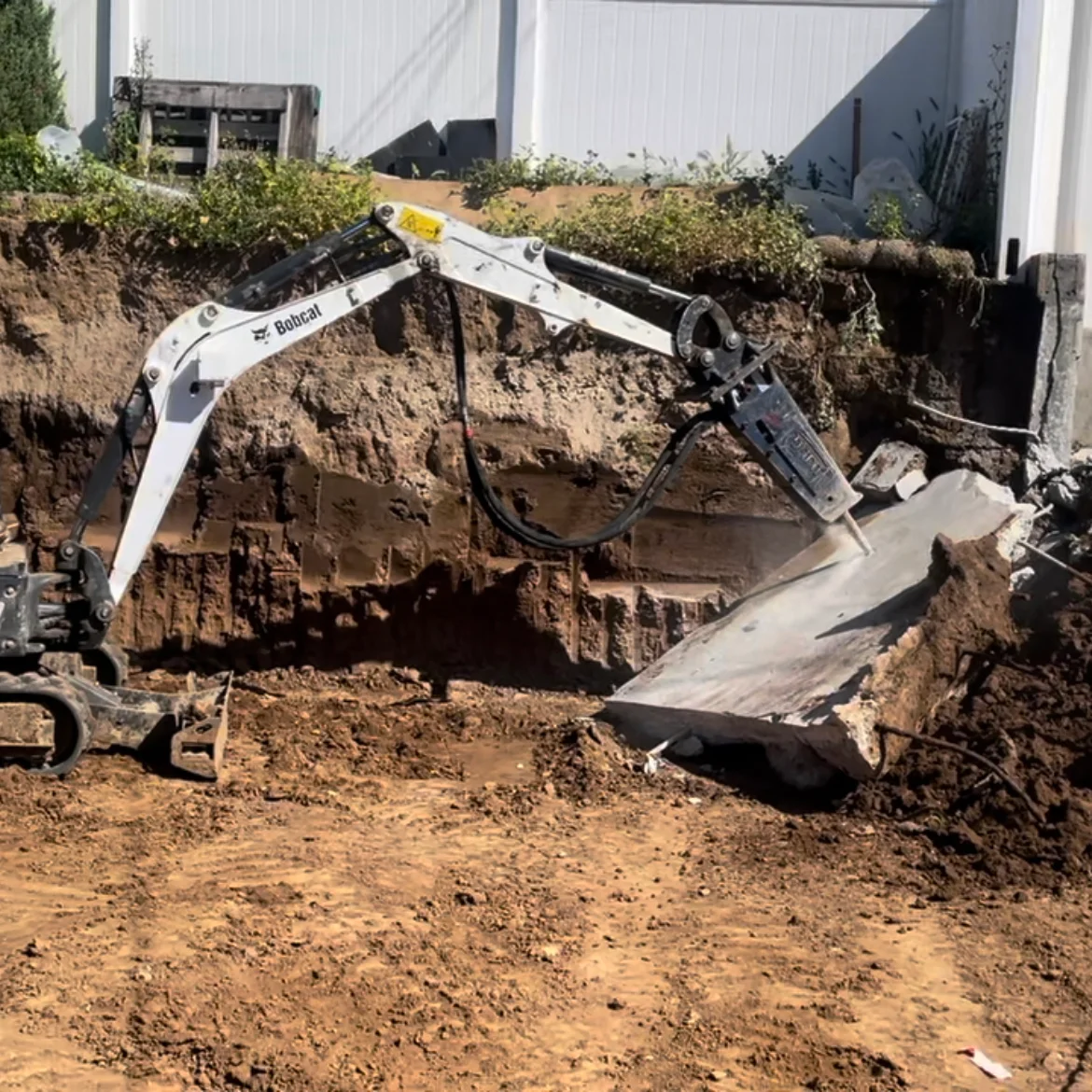
Cost Driver 2: Full Removal vs Partial Fill / Abandonment
Often the biggest scope fork:
- Full removal takes the shell out (or the substantial portion required by code), then backfills and compacts—usually cleaner long-term if you plan a remodel, ADU, or heavy landscaping over the old footprint.
- Partial demolition / fill-in (abandon-in-place where allowed) may involve perforating the shell, removing equipment, and filling to approved standards. Labor and haul volume can change—but you still need proper drainage, compaction, and documentation.
Ask: What does my city require? Will the filled area support future structures or only landscaping? What compaction testing or inspection is included? Never assume “fill the pool” means the same scope in every bid.
Cost Driver 3: Backfill Material and Compaction
Cost drivers here include type of fill required, depth and volume of the pool, compaction method and lifts, and soil reports or compaction tests if required for permit close-out or future building.
Poor compaction is a classic source of settling, drainage problems, and buyer concerns later. In Orange County’s mix of clay, sandy, and hillside soils, this is not the place to cut corners in planning.
Cost Driver 4: Permits, Inspections, and Utilities
Plan to discuss demolition or building permits, utility disconnects (gas, electrical, water), equipment removal, and inspections at key stages. Ask who pulls the permit, who schedules inspections, and what happens if a correction notice appears. Fees and timing vary by jurisdiction.
Cost Driver 5: Haul-Away and Debris Disposal
Concrete, rebar, plaster, tile, and decking add up. Cover staging on your property, estimated loads based on shell size (not a fixed promise until measured), recycling vs landfill practices, and driveway/curb protection. Tight coastal lots and cul-de-sacs can increase labor if materials must be wheeled farther from the street.
Cost Driver 6: Deck Removal, Coping, and Hardscape
Decide early: Is the concrete deck coming out? Are you keeping patio sections, outdoor kitchens, or spas? Will new grading need to tie into drains or retaining walls? Leaving a random deck outline often looks unfinished and complicates landscaping. Including (or clearly excluding) deck work keeps your budget honest.
Cost Driver 7: Landscaping and Yard Restoration
Demolition gets the pool out. Restoration makes the yard usable. Budget separately—or as an optional package—for grading and drainage, topsoil, sod/seed/xeriscape, irrigation changes, fencing disturbed during access, and future plans (sport court, garden, ADU pad) that need a different finish grade. If resale is a goal, ask how drainage will be documented for buyers.
How South Coast Demo Helps You Build a Real Scope
The mechanism isn’t a guess at a single price—it’s a site-based scope conversation:
- Walk the property (access, slope, overhead lines, deck and hardscape).
- Confirm city rules for full vs partial removal.
- Line up fill, compaction, haul, permits, and restoration as clear categories.
- Deliver a written scope you can compare against other bids on equal footing.
A lower number that skips compaction testing, deck removal, or proper fill is not a bargain—it is a different project.
How to Compare Bids Without Guessing at Prices
| Ask about | Why it matters |
|---|---|
| Full vs partial removal | Biggest scope difference |
| Fill type + compaction method | Settlement and code compliance |
| Permits included? | Avoids surprise owner costs |
| Deck / hardscape in or out | Changes haul and finish work |
| Access assumptions | Extra labor on tight lots |
| Restoration included? | Yard usability after demo |
| Timeline and inspection holds | Planning for living around the work |
Orange County / South Coast Planning Tips
- Walk the property with the contractor—photos help, but access and slope change the plan.
- Check HOA rules early (work hours, staging, exterior standards).
- Coordinate with future projects (ADU, patio cover) so fill standards match that goal.
- Ask about weather and grading windows in Southern California.
- Keep permit finals, compaction notes, and before/after photos for resale.
Request an Orange County Pool Removal Quote
If you are planning in-ground pool removal in Orange County, start with scope—not a guessed number. Request an Orange County pool removal quote from South Coast Demo—we’ll walk your property, explain full vs partial options for your city, and outline the cost drivers that belong in your written scope.